

Midlands regulars: the Jackal Buzzard
The first in a monthly series on the birds I see most around home. A striking raptor with a call like a jackal, found almost only in southern Africa.
Every month I’m going to pick one of the birds I see most around home in the Midlands — the regulars. They’re the ones that are easy to drive past without a second look, but most of them have a story worth telling. First up, the one I probably see more than any other bird of prey.
If you drive the back roads of the Midlands for any length of time, you’ll see one. It’s usually on top of a telephone pole or a fence post, hunched into the wind, watching the grass below. You slow down for a better look, it drops off the pole, opens those wings, and it’s gone across the field before you’ve found your camera.
Why “jackal”?
You’ll often hear one before you see it. The call is a loud, yelping bark that sounds remarkably like a black-backed jackal at dusk. The first time I heard one properly, I looked around for the jackal before realising it was coming from above.
Knowing one when you see it
An adult is a handsome bird: dark slate-grey to black on top, a rich rufous-chestnut chest and a reddish tail. The best view is from below as it flies over. The underwings are a bold mix of black and white with a dark leading edge, and once you’ve seen that pattern you’ll pick it out from a long way off.
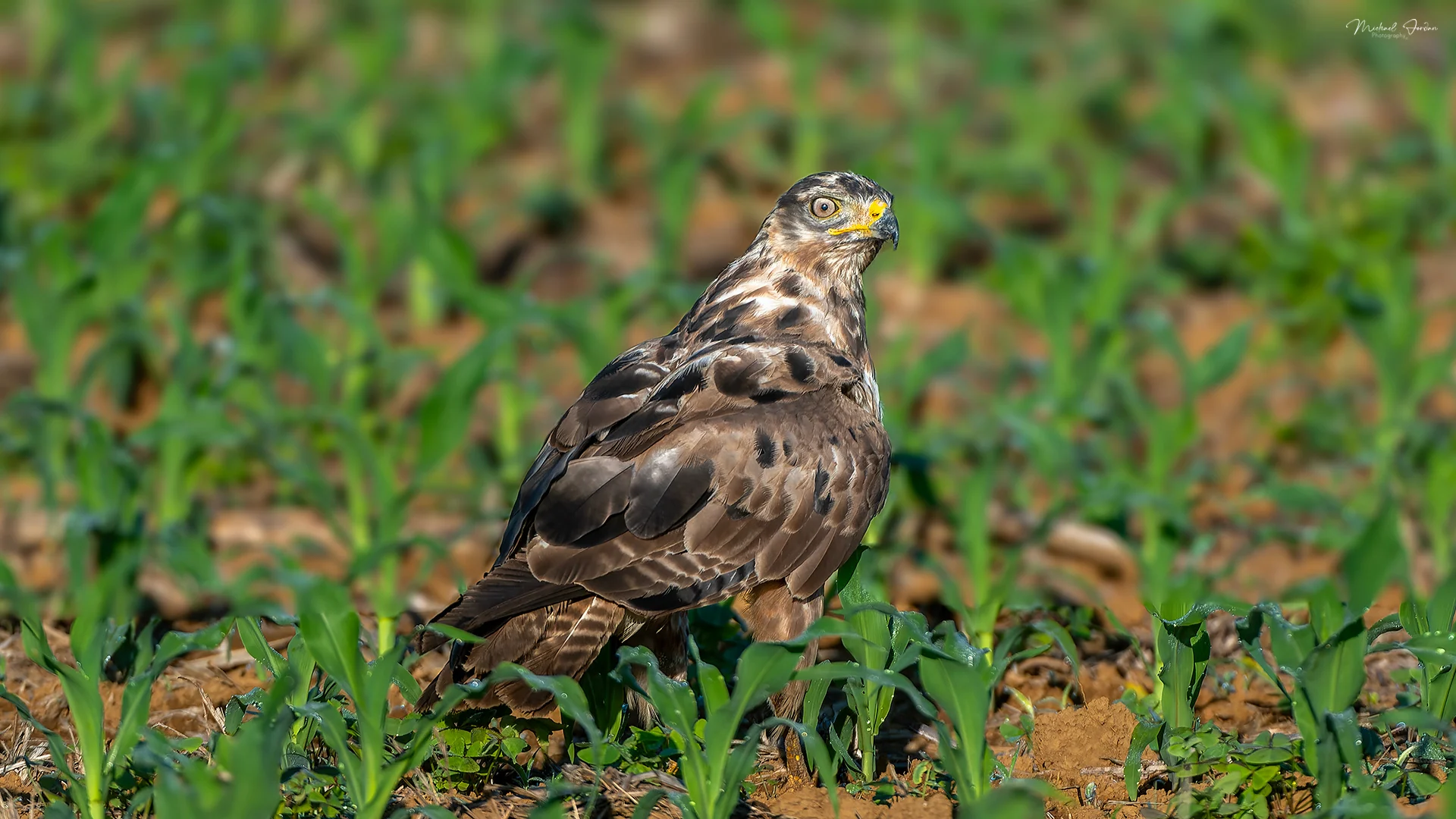
The youngsters are where it gets tricky. Juveniles are a plain, washed-out brown and look like a different bird altogether, and it takes them a few years to grow into adult colours. A big, brown, buzzard-shaped bird sitting in the same kind of spot as the adults is very often a young Jackal.
Our buzzard
What I love about this one is that it’s ours. It’s found almost only in southern Africa, so birders fly in from overseas hoping to see one, and we pass them on the way to work. Here in the Midlands they love the mix of grassland, farmland and rolling hills — anywhere with a view and a bit of a breeze.
How it hunts
Jackal Buzzards are patient. Most of the time they sit on a high perch and watch, then drop onto whatever moves in the grass. Mostly rodents, but also reptiles, small birds and the odd bit of roadkill, which is one reason you see so many along the roads.
The other trick is my favourite to watch. On a windy day one will face into the wind over a slope and just hang there, wings half-open, barely moving, scanning the ground. Then it folds and drops.
The three that got me
For a bird I see almost every day, I have surprisingly few photos of it worth sharing. They’re easy to see and hard to photograph: most of them are gone the moment the car slows down. These are the three I’m happiest with.
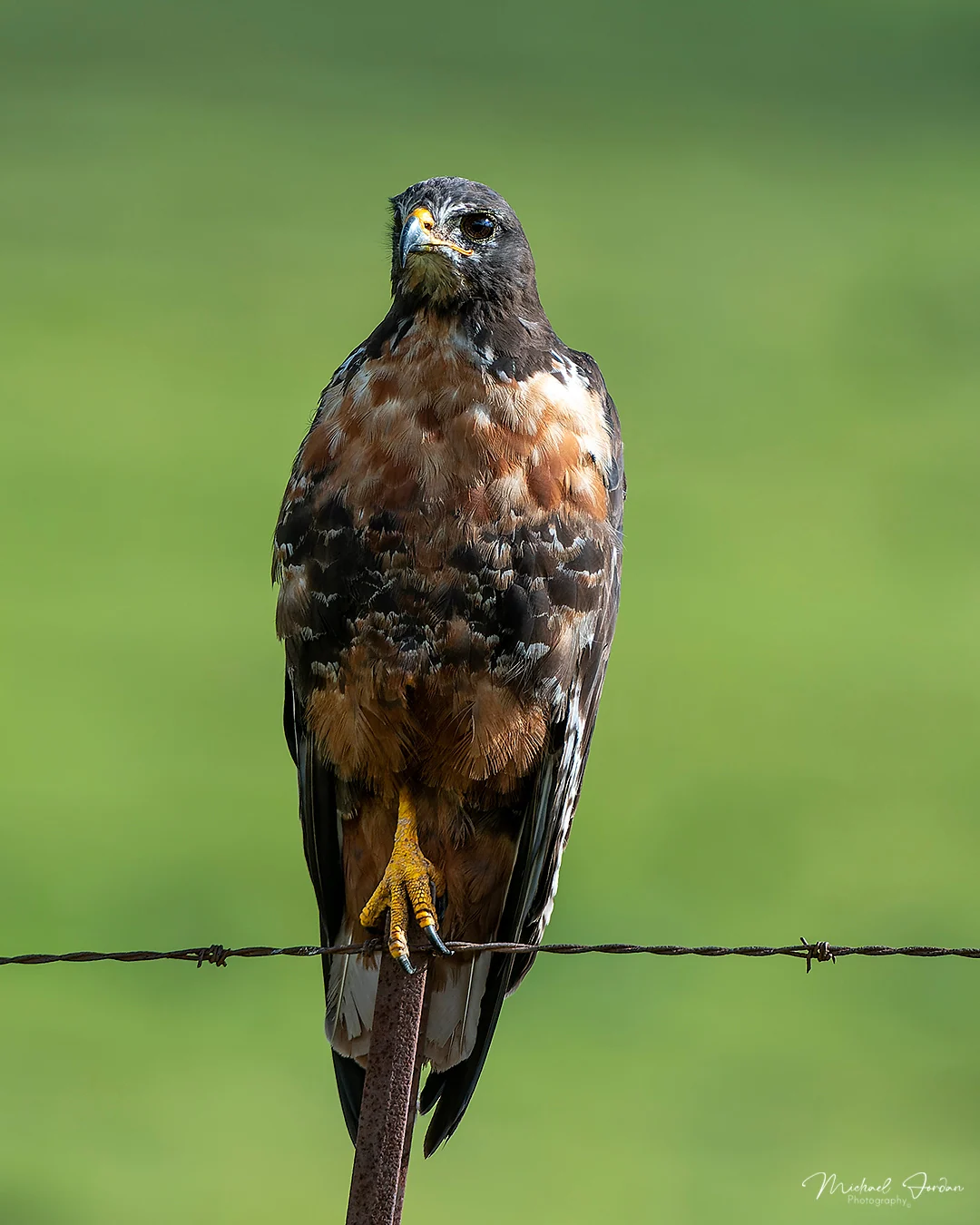
The one at the top (Kamberg Valley, January 2025): This is the classic Jackal Buzzard pose: one leg on a rusty fence post, the other tucked up, barbed wire running right under its feet. It sat there and gave me a proper look, long enough for me to get the whole bird with nothing but soft green summer grass behind it. Look at that chest: patchy and mottled rather than one clean block of rufous, a bit scruffier than the field guide pictures, and I love it for that.
Nikon D500, 200–400mm f/4 at 340mm, 1/2500s, f/4, ISO 400
Benvie Gardens, November 2024: Remember the confusing youngsters? This is one. No black, no rufous chest: just soft brown and cream, and a look over the shoulder that says it knew exactly where I was. I had it against a perfectly clear blue sky, and it’s still one of my favourite portraits. If you see a bird like this on a Midlands pole and think “some kind of brown buzzard”, there’s a good chance it’s this.
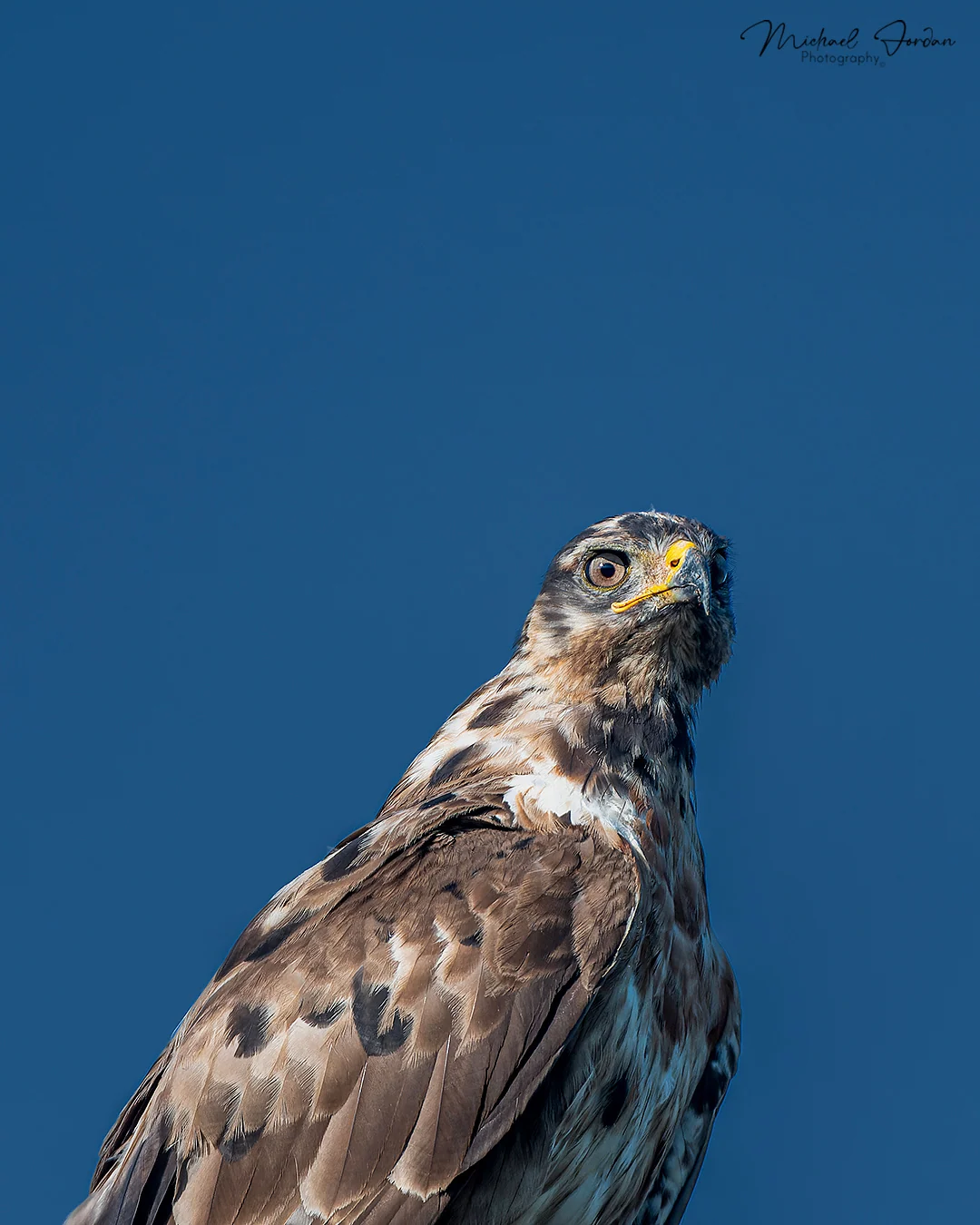
Nikon D500, 200–400mm f/4 at 400mm, 1/4000s, f/4, ISO 250
Cumberland Nature Reserve, Pietermaritzburg, March 2024: And this is the moment that usually beats me: the second it leaves the post. This time I was ready. Wings fully open, talons still hanging, and there’s that pattern from underneath I keep going on about: black and white flight feathers, the dark leading edge, the rufous chest and that chestnut tail fanned out behind. On a grey, overcast day the sky turned into a clean white backdrop, and every feather shows.
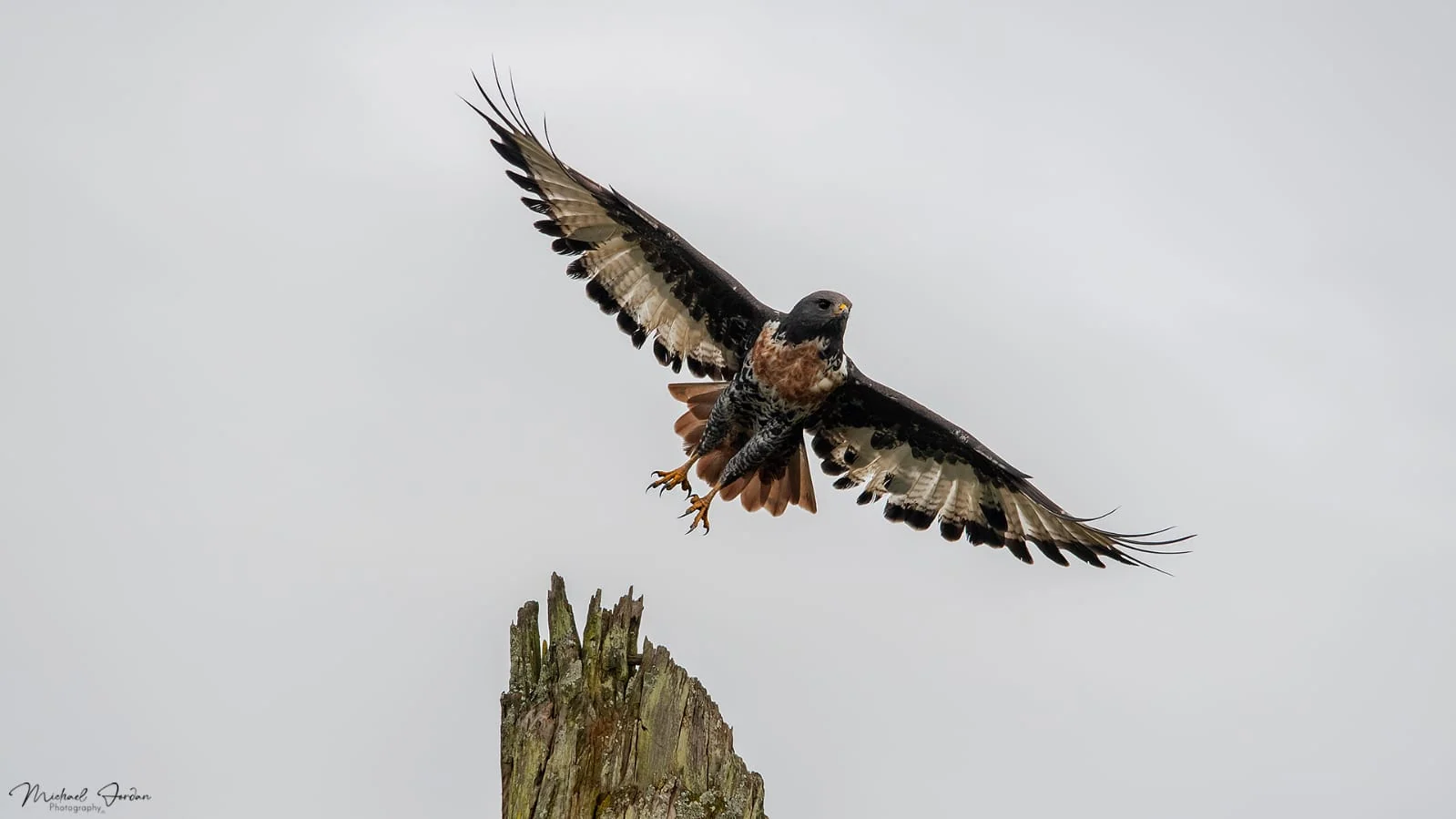
Nikon D500, 200–400mm f/4 at 400mm, 1/2500s, f/4, ISO 400
Photographing them
A few things I’ve learnt the hard way:
- Don’t stop right next to the pole. They put up with a car driving past, but braking hard beside one almost always sends it off. Slow down early, stop a little short, and use the car as a hide. Engine off if you can.
- Watch the wind. They take off into it. With the wind at your back they’ll often come towards you, and you get the take-off instead of the tail.
- Be ready before it moves. Fast shutter (1/2000s or quicker for flight), continuous focus, burst. When it leans forward and the feathers tighten, it’s about to go.
- Go for the light. Early morning or late afternoon sun on that rufous chest is something special. Midday washes it out and puts the eye in shadow.
Next time you see one
Next time you’re driving through the Midlands and there’s a dark shape on a pole, slow down and have a proper look. It’s one of the most beautiful birds we have, and it’s right on our doorstep.
Stay tuned for the next part of Midlands regulars. If there’s a local bird you’d like me to cover, let me know.